
Introduction
The internet has evolved rapidly over the past two decades. From static web pages to social media and now blockchain-based platforms, technology continues to reshape how people interact online. Today, the biggest discussion in the tech world is about Web2 vs Web3 technology.
Web2 represents the current internet dominated by social media platforms, cloud services, and centralized systems. Web3, on the other hand, introduces decentralization, blockchain, and digital ownership. Understanding the difference between these two models is essential for businesses, developers, and everyday users.
This article explains Web2 and Web3 in simple terms, highlights their key differences, and explores what the future may look like.
What is Web2?
Web2 refers to the current version of the internet where users can create, share, and interact with content. Platforms like Facebook, YouTube, Google, and Instagram are examples of Web2 applications.
Key Features of Web2
- Centralized platforms control data
- Users create content but do not own it fully
- Cloud-based services
- Social networking and collaboration
- Advertising-driven business models
Web2 made the internet interactive and social. However, it also created concerns about data privacy, platform control, and digital ownership.
What is Web3?
Web3 is the next generation of the internet powered by blockchain technology. It focuses on decentralization, transparency, and user ownership of data.
Key Features of Web3
- Decentralized networks
- Blockchain technology
- Cryptocurrency payments
- Smart contracts
- User-owned digital assets
Web3 allows users to control their identity, data, and digital assets without relying on centralized companies.
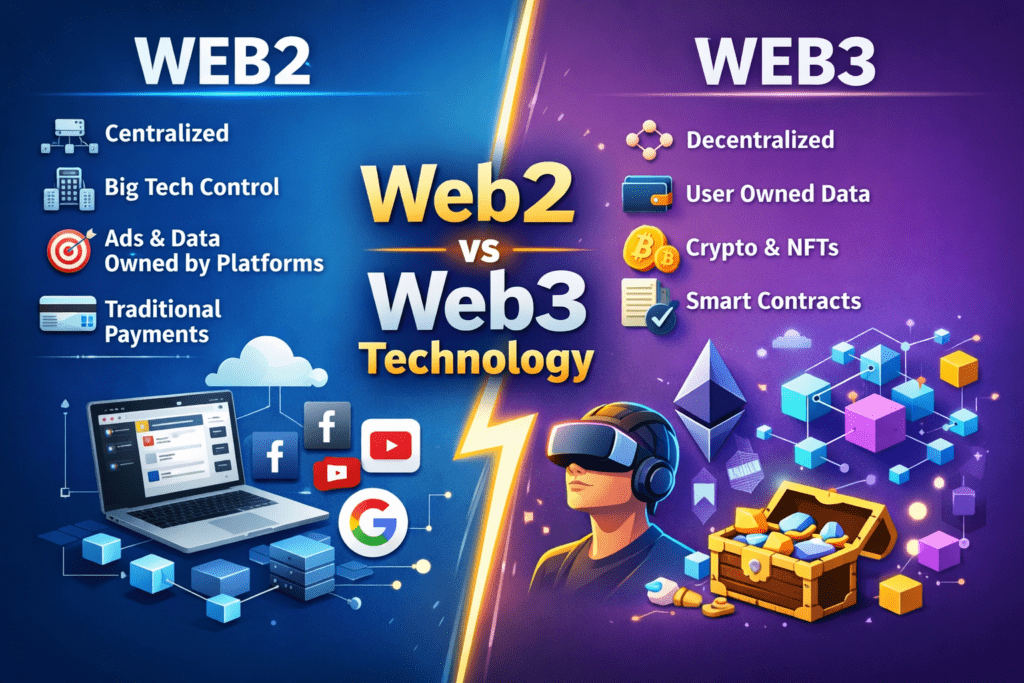
Web2 vs Web3: Key Differences
1. Ownership
- Web2: Platforms own user data
- Web3: Users own their data and assets
2. Control
- Web2: Controlled by large tech companies
- Web3: Controlled by decentralized networks
3. Payments
- Web2: Traditional payment systems
- Web3: Cryptocurrency and tokens
4. Security
- Web2: Centralized servers vulnerable to hacks
- Web3: Blockchain-based security
Benefits of Web3 Technology
Web3 offers several advantages over traditional Web2 systems:
- Greater privacy and security
- Digital ownership of assets
- Transparent transactions
- Reduced dependence on middlemen
- New earning opportunities through tokens and NFTs
Challenges of Web3
Despite its potential, Web3 still faces challenges:
- Complex user experience
- Regulatory uncertainty
- Scalability issues
- High transaction fees in some networks
Future of Web2 and Web3
Web3 will not completely replace Web2 immediately. Instead, both technologies will likely coexist. Many companies are already integrating blockchain features into existing platforms.
Businesses that adapt early to Web3 technologies may gain a competitive advantage in the digital economy.
Conclusion
The shift from Web2 to Web3 represents a major transformation in how the internet works. While Web2 focuses on centralized platforms and services, Web3 emphasizes decentralization, transparency, and user ownership.
Understanding Web2 vs Web3 technology helps individuals and businesses prepare for the future of the internet.