
Web3 Identity aaj ke digital world me ek aisa concept hai jo dheere-dheere humare login system, KYC process aur online identity ko completely change kar raha hai. Aaj hum passwords, OTPs aur documents ke upar depend hain, lekin future me digital identity ka control companies ya governments ke paas nahi balki directly user ke haath me hoga.
Is article me hum detail me samjhenge ki Web3 Identity kya hoti hai, iska background kya hai, ye kaise kaam karti hai, real-life use cases kya hain, government ka role kya ho sakta hai, aur is technology ke risks aur future possibilities kya hain.
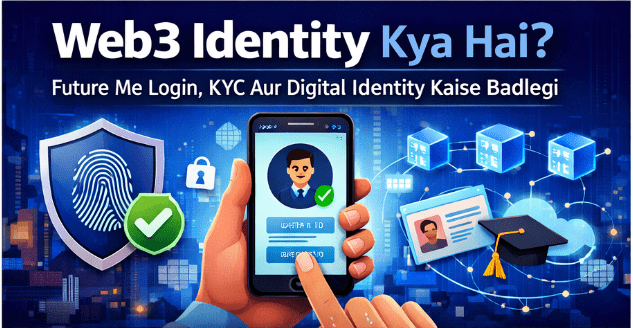
Web3 Identity Kya Hai Aur Ye Future Me Kyun Important Hai?
Simple shabdon me, Web3 Identity ek decentralized digital identity system hai jisme user apni identity ka owner khud hota hai.
Iska matlab ye hai ki aapki identity Facebook, Google, bank ya kisi government database ke control me nahi hoti.
Aaj ke time me jab bhi aap kisi website par login karte ho, to aap apna data kisi na kisi company ko de dete ho. However, Web3 Identity me aap sirf wahi information share karte ho jo zaroori ho, wo bhi bina full data expose kiye.
Isi wajah se Web3 Identity future ke internet ka ek important pillar ban rahi hai.
Digital Identity Ka Evolution
Internet ke early days me digital identity ka concept bahut simple tha.
User ID aur password hi identity maana jata tha.
Lekin jaise-jaise internet grow hua, problems bhi badhne lagi:
- Password leaks
- Data breaches
- Fake profiles
- Identity theft
Web2 era me Google aur Facebook jaise platforms ne login easy banaya, lekin iske badle me users ne apna data unhe de diya.
Is situation se nikalne ke liye hi Web3 Identity ka concept saamne aaya, jahan identity centralized servers par nahi balki blockchain-based systems par manage hoti hai.
Decentralized Identity System Kaise Kaam Karta Hai?
Web3 Identity ka base hota hai Decentralized Identity (DID) aur Self-Sovereign Identity (SSI).
Is system me:
- User ke paas ek digital wallet hota hai
- Wallet sirf paisa nahi, balki identity credentials bhi store karta hai
- Identity proofs cryptographically verified hote hain
For example, agar aapko ye prove karna hai ki aap 18+ ho, to aap apni date of birth share karne ke bajay sirf “Yes, I am above 18” ka proof share kar sakte ho.
Is tarah se privacy bhi protect hoti hai aur trust bhi bana rehta hai.
Real-Life Use Cases of Decentralized Digital Identity
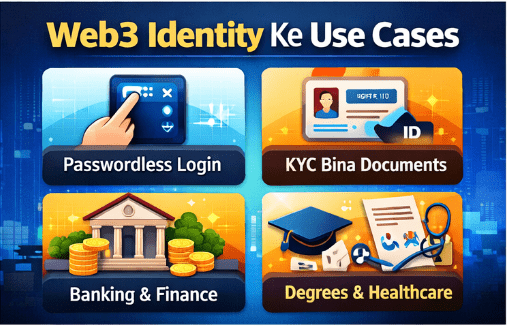
Password-less Login System
Web3 Identity ke saath passwords ki zaroorat hi khatam ho sakti hai.
User apne wallet se sign karke login karega, jo zyada secure bhi hoga aur convenient bhi.
KYC Bina Documents Share Kiye
Traditional KYC me aap apna Aadhaar, PAN ya passport upload karte ho.
On the other hand, Web3 Identity me aap sirf verified proof share karte ho, documents nahi.
Isse data misuse ka risk kaafi kam ho jata hai.
Banking Aur Finance Sector
Banks aur financial institutions Web3 Identity ka use karke:
- Fraud kam kar sakte hain
- Customer onboarding fast kar sakte hain
- Repeated KYC ko eliminate kar sakte hain
Education Certificates Aur Degrees
Fake degrees aur certificates aaj bhi ek bada problem hain.
Web3 Identity ke through education records blockchain par verify ho sakte hain, jisse authenticity instantly check ho jati hai.
Healthcare Records
Healthcare me patient ka data bahut sensitive hota hai.
Web3 Identity ke saath patient decide karega ki kaunsa doctor kaunsa data dekh sakta hai, aur kab tak.
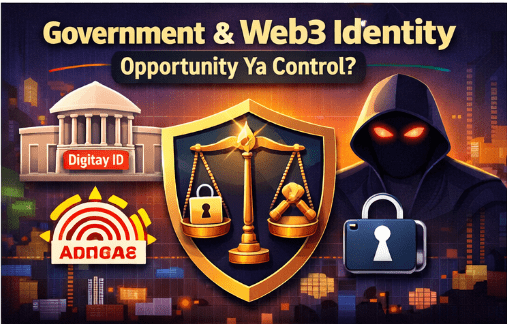
Government Aur Web3 Identity: Opportunity Ya Control?
Government ke liye Web3 Identity ek powerful tool ho sakta hai.
Digital IDs, welfare schemes aur citizen services zyada efficient ho sakti hain.
However, yahan ek important question uthta hai — privacy ka.
Agar government Web3 Identity systems ko fully control karegi, to decentralization ka purpose hi khatam ho sakta hai.
Isliye future me ek balanced model zaroori hoga jahan regulation ho, lekin user control bhi bana rahe.
Blockchain Aur AI Milkar Web3 Identity Ko Kaise Strong Bana Rahe Hain
AI ka sabse bada problem hai trustworthy data.
Agar data fake ho, to AI ka output bhi unreliable ho jata hai.
Yahan par blockchain aur Web3 Identity ka role aata hai:
- Blockchain data ko tamper-proof banata hai
- AI us verified data par decisions leta hai
Is combination se fake profiles, bots aur identity fraud detect karna kaafi easy ho jayega.
Web3 Identity Ke Risks Aur Challenges
Har nayi technology ke saath kuch challenges bhi aate hain.
Wallet Loss Ka Risk
Agar user apna wallet access kho deta hai, to identity recover karna mushkil ho sakta hai.
User Awareness Ki Kami
Common users ke liye Web3 concepts abhi bhi thode complex hain.
Legal Aur Regulatory Issues
Different countries me identity laws alag-alag hain, jo global adoption ko slow kar sakte hain.
Scalability Problems
Large-scale adoption ke liye systems ko aur fast aur affordable banana hoga.
Web3 Identity Ka Future: Kya Passwords Aur Traditional KYC End Ho Jayega?
Aane wale saalon me ye expect kiya ja raha hai ki:
- Passwords dheere-dheere obsolete ho jayenge
- Repeated KYC ka concept khatam ho sakta hai
- User apni identity ka real owner banega
Overall, Web3 Identity ek aisa future promise karti hai jahan digital trust companies ke promises par nahi, balki technology par based hoga.
Conclusion: Web3 Identity – Digital Trust Ka Naya Model
Web3 Identity sirf ek technical upgrade nahi hai, balki ye internet ke trust structure ko redefine karti hai.
Ye users ko power deti hai, privacy ko protect karti hai, aur fraud ko kam karti hai.
Jaise-jaise digital world aur complex hota ja raha hai, waise-waise Web3 Identity future ke internet ki foundation ban sakti hai.
Frequently Asked Questions (FAQs)
Web3 Identity ek decentralized digital identity system hai jahan user khud apni identity ka owner hota hai.
Haan, kyunki ye cryptography aur blockchain par based hoti hai.
Future me regulation hogi, lekin ideal model me user control priority rahega.
Aadhaar centralized hai, jabki Web3 Identity decentralized aur user-controlled hoti hai.
Pingback: Web2 vs Web3 Technology Key Differences, Benefits and Future of the Internet - Daily Article Hub