
Introduction
Bitcoin Halving 2024-25 is set to be one of the most important financial events of this decade. The upcoming Bitcoin Halving 2024-25 could reshape global wealth through reduced supply, rising institutional demand, and ETF adoption. As traditional economies rely on money printing and inflation-driven policies, Bitcoin operates on fixed mathematical rules that cannot be altered, making this event a defining moment for investors and institutions worldwide.
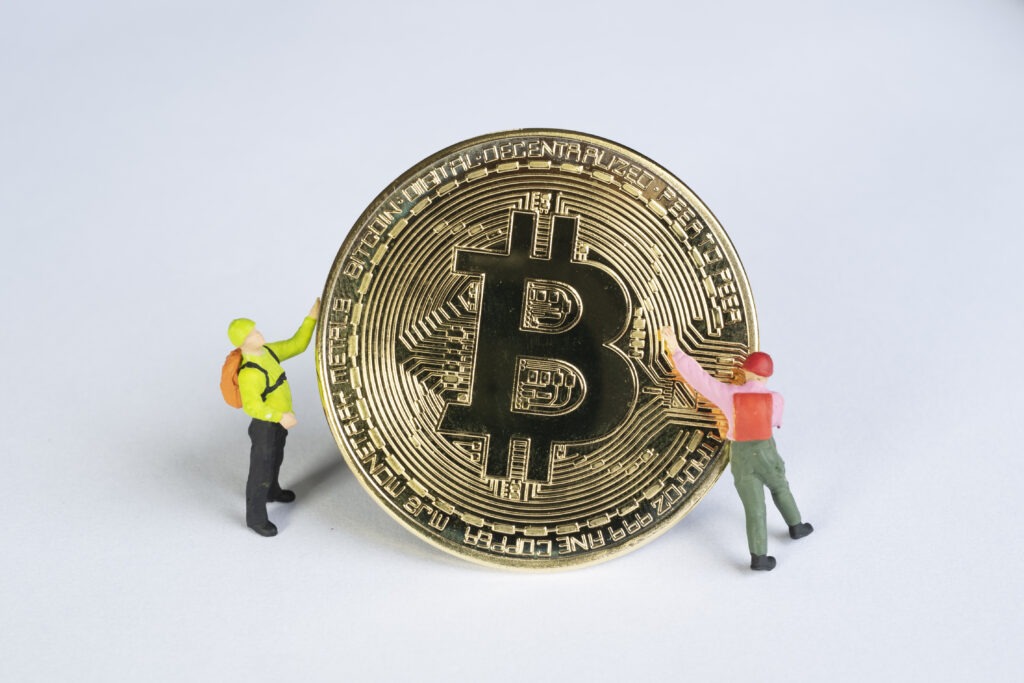
Understanding Bitcoin halving is no longer optional for serious investors. The mechanisms of supply reduction, institutional participation, and ETF adoption are converging, setting the stage for potentially transformative market outcomes. Over the next year, individuals and institutions who position themselves strategically may reap substantial gains, while those who remain on the sidelines risk being left behind.
What Is Bitcoin Halving 2024–25 and Why It Matters
Bitcoin halving is a pre-programmed, automatic reduction in the rewards miners receive for validating transactions and maintaining the network. Roughly every four years, or after 210,000 blocks are mined, the block reward is reduced by 50%, limiting the flow of new coins into circulation.
Because Bitcoin’s total supply is capped at 21 million coins, each halving strengthens the cryptocurrency’s scarcity, reinforcing its deflationary nature. Unlike fiat currencies, which can be printed at will, Bitcoin cannot be manipulated by governments or central banks. This predictable scarcity is one reason investors increasingly view it as a digital store of value, akin to gold but borderless, portable, and resistant to censorship.
With the upcoming 2024–25 halving, these dynamics are likely to have profound consequences for price, market behavior, and long-term wealth distribution.
How Bitcoin Halving 2024–25 Works: A Beginner-Friendly Explanation
Bitcoin’s mining rewards have consistently followed a halving schedule:
- 2009: 50 BTC per block
- 2012: 25 BTC per block
- 2016: 12.5 BTC per block
- 2020: 6.25 BTC per block
- 2024–25: 3.125 BTC per block
This stepwise reduction impacts both the economics of mining and market supply. Miners with outdated or inefficient operations may struggle to remain profitable, which could lead to consolidation in the mining sector. On the other hand, the reduction in newly minted Bitcoin also reduces constant selling pressure, historically creating conditions for long-term price growth.
The predictable nature of these reductions is unique to Bitcoin, giving investors and institutions certainty in supply dynamics, a feature not found in traditional assets.
Bitcoin Supply Scarcity and Long-Term Value Creation
Scarcity is a cornerstone of Bitcoin’s value. When the rate of new supply decreases while demand remains steady or grows, the resulting supply-demand imbalance can trigger significant price appreciation.
Unlike physical assets such as gold or real estate, Bitcoin’s scarcity is transparent, verifiable, and auditable. Every participant can track how many Bitcoins exist and how quickly new ones are being minted. This transparency, combined with growing mainstream adoption, gives Bitcoin an increasingly robust value proposition.
Historically, each halving event has created a structural shock to supply that precedes sustained bull markets, demonstrating the power of predictable scarcity.
History of Bitcoin Halving and Its Impact on Global Wealth
Bitcoin Halving 2012: Birth of Digital Millionaires
Before the first halving in late 2012, Bitcoin was trading below $15. Within a year, it surged past $1,000. Early adopters, including miners and enthusiasts, experienced unprecedented wealth creation, often outperforming traditional equities and commodities by orders of magnitude.
This cycle demonstrated Bitcoin’s potential to create digital millionaires almost overnight, laying the foundation for its global wealth narrative.
Bitcoin Halving 2016: From Experiment to Global Asset
After the 2016 halving, Bitcoin’s price climbed from approximately $650 to nearly $20,000 by the end of 2017. During this period, cryptocurrency exchanges expanded globally, and institutional interest began to grow. Bitcoin transitioned from a niche, experimental asset into a legitimate investment vehicle for both retail and professional investors.
Bitcoin Halving 2020: Pandemic, Fear, and a Historic Bull Run
Despite the economic uncertainty caused by the COVID-19 pandemic, Bitcoin surged from under $9,000 to almost $69,000 by November 2021. This cycle cemented Bitcoin’s narrative as “digital gold”, proving it could not only survive but thrive during periods of global economic stress.
Why Bitcoin Halving 2024–25 Is Different
The 2024–25 halving differs significantly from previous cycles due to several key factors:
1. Institutional Adoption and ETFs
For the first time in history, Spot Bitcoin ETFs have been approved in the U.S., providing regulated access for pension funds, hedge funds, and traditional investors. These instruments allow capital inflows at a scale that was not possible in prior cycles.
Reference: BlackRock Bitcoin ETF Overview
2. Mining Economics and Market Consolidation
As rewards drop to 3.125 BTC per block, less efficient miners may exit the market. This will likely reduce short-term selling pressure and strengthen long-term price support.
3. Global Macroeconomic Conditions
Persistent inflation, currency devaluation, and global debt concerns make Bitcoin increasingly attractive as a hedge against fiat currency risk. Unlike gold, Bitcoin is easily transferable across borders and can be securely stored digitally.
Bitcoin Price Outlook: Short-Term and Long-Term
Short-Term Volatility After Halving
Historically, the months immediately following a halving are marked by consolidation, sideways movement, or sharp corrections. These phases act as a market filter, removing weak hands and speculative traders before the next phase of sustained growth begins.
Long-Term Price Projections
Drawing from stock-to-flow models and historical cycles, many analysts predict Bitcoin could surpass $100,000 within 12–18 months post-halving. Some long-term projections even suggest that, with continued institutional adoption and ETF inflows, prices could climb significantly higher over a multi-year horizon.

Who Benefits Most From Bitcoin Halving 2024–25
Retail Investors
Disciplined investors who adopt dollar-cost averaging (DCA) and maintain a long-term holding strategy typically outperform those attempting short-term trading. Early accumulation is key to capturing the majority of gains in post-halving cycles.
Institutional Investors
Institutions benefit from scale, regulatory clarity, and long-term investment horizons. Their algorithmic and strategic accumulation provides market stability and reduces extreme volatility.
Common Bitcoin Investment Myths
- “You must buy a whole Bitcoin” – False. Bitcoin is divisible into 100 million satoshis, making participation possible at virtually any investment level.
- “Bitcoin is too volatile” – While short-term swings are common, long-term adoption and halving cycles historically drive upward trends.
- “Halving affects transaction speed” – Incorrect. Only miner rewards change; network security and block times remain consistent.
Risks Associated With Bitcoin Halving 2024–25
Market Manipulation and Whales
Large holders (“whales”) can impact short-term price movements. However, long-term trends are driven by adoption, macro factors, and scarcity, not individual actions.
Regulatory Uncertainty
Crypto regulations remain fragmented globally. Some jurisdictions are supportive, others hostile. Staying informed is essential to mitigate compliance and investment risks.
Reference: World Economic Forum – Crypto Regulation
Impact on Altcoins and Broader Crypto Market
Bitcoin Dominance
Bitcoin generally leads post-halving market rallies. Once stability is established, capital rotates into altcoins, often triggering “altcoin seasons” where smaller tokens outperform Bitcoin temporarily.
Emerging Sectors Likely to Benefit
- Decentralized Finance (DeFi) – Lending, borrowing, and yield platforms
- Layer-2 Scaling Solutions – Faster, cheaper blockchain transactions
- AI-Blockchain Projects – Integrating AI for predictive and compute-based applications
Final Thoughts on Bitcoin Halving 2024–25
Bitcoin Halving 2024–25 is more than a technical adjustment to mining rewards. It represents a defining moment in global financial history where predictable scarcity meets institutional adoption and macroeconomic uncertainty. For investors, both retail and institutional, understanding the mechanics, timing, and long-term implications of this halving could mean the difference between substantial gains and missed opportunities.
Over the next 12 months, strategic positioning, patience, and informed decision-making are essential. Bitcoin continues to prove that financial systems can operate transparently and securely without central control, offering a new paradigm for wealth creation in the digital age.
Frequently Asked Questions (FAQs)
It is expected around April 2024, at block height 840,000.
No. Transaction speed is unaffected.
Historically, accumulation before and during halving has benefited long-term holders.
Mining rewards are cut in half, forcing efficiency and innovation.
No. Halvings will continue until approximately 2140.
Pingback: Top 5 Cryptocurrency Coins Ready to Explode in 2026 - Daily Article Hub